Is Another Functional Medicine Certification Worth It?
November 17, 2026
The enrollment page is open in another tab, the price looks manageable, and you’re about 80% sure this functional medicine certification is worth it. Okay, maybe 70%. You’ve been here before, and you still remember how good it felt to finish the last one.
Whether it’s worth it depends less on how good the program is and more on the problem you’re hoping it will solve.
If you keep getting patients you don’t know how to help, the right training can change your practice. But if your calendar is only half full, or your patients stop coming after a few visits, having a few more letters behind your name probably won’t fix that. It’s far more likely that the problem has to do with the business side of your practice.
Before you decide to enroll in another clinical training, take fifteen minutes and watch the episode below. It might save you a few thousand dollars, or it might confirm that you’re making the right decision.
When Is a Functional Medicine Certification Worth the Money?
A functional medicine certification is worth it when it solves a specific clinical problem in your practice. It isn’t worth it when the problem is related to the business side. That’s true whether you’re a chiropractor, an acupuncturist, or a clinical nutritionist.
Taking care of patients and running a profitable practice are two very different skill sets. When your training focuses on the clinical side and skips the business side, marketing, pricing your services, and following up with patients can feel like a foreign language.
So when the practice isn’t the way you expected, it’s natural to assume your clinical knowledge is what needs sharpening. This feels like the safest route to take – it’s what you were taught in school.
Another clinical certification is worth the money when it solves a clinical problem you can’t solve yet.
That doesn’t mean that you can’t be successful running a business. Just like reading a blood test, growing a business is just another skill to learn. The first time you looked at a lab test, it was a list of numbers that meant nothing. But now, you can glance at a lab result and know exactly where to go next.
Why Do I Have So Many Certifications but Not Enough Patients?
Most of the time, it’s because you’ve been solving a business problem using your clinical training. We default to what’s comfortable and familiar. And marketing, pricing, and patient follow-ups are new skills that have nothing to do with functional medicine. So a new course will always sound more intriguing than figuring out why your patients aren’t rebooking.
And it isn’t only certifications. It’s another modality, another device, another gadget that promises to be the thing that finally grows the practice. Most of us have bought a few of them and are still waiting for the ROI to show up.
Finishing a clinical certification also feels like progress. It soothes the imposter syndrome for a little while, and it gives you something to show for the money and the time.
Signing up for more clinical training to avoid a business problem is procrastination, even when it looks like professional development.
That doesn’t mean you should stop learning. It means you should know exactly why you’re signing up before you hand over another $5,000.
How Do I Choose the Right Functional Medicine Certification?
Choose a functional medicine certification by starting with the problem you need it to solve, not with the program. The first question to ask yourself is “What problem am I actually trying to solve?”
“I want more confidence” or “I just want to learn more” doesn’t count. A better answer sounds more like, “I keep getting thyroid patients and I don’t know what to do with them.” That’s specific, and it points to a clinical problem that the right training can solve.
But if your answer is “patients keep dropping off and I don’t know why,” that’s something completely different. Having more thyroid training won’t likely change the results because the problem is most likely a missing system or process inside your practice.
The second question is, will this investment solve that problem? If the problem is poor marketing, a website that isn’t working, or follow-ups that don’t happen, another clinical training isn’t going to help.
The right investment is the one that solves the problem you actually have, not the one that feels most comfortable to buy.
The tendency is always to say, “I’ll just get one more certification and then I’ll be fine.” But if it doesn’t solve the problem, you’ll have spent the time and the money, and the problem will still be sitting there waiting for you.
How Do I Know If a Training Will Pay for Itself?
You know a training will pay for itself when you can explain, before you enroll, how you’re going to recover the cost within a certain period of time. This is the third question, and one we don’t consider often enough.
Say you’re considering enrolling in a $5,000 functional medicine training. Ask yourself what the training will provide that will give you that $5,000 back so you can recover your investment. Every business investment, whether a course, seminar, training, or other activity, should have a defined ROI or return on investment. It needs to improve your ability to make more money in the business.
If you can say, “This training will bring me an extra 15 to 20 patients,” that’s a great indicator that your investment may be worth it. Then ask how much each of those patients is worth to your practice, because that number tells you whether the training will pay for itself.
Before you spend money on any training, determine the ROI – this is the most important consideration you can make.
You’re running a business, and having a profitable practice is what allows you to take time off without worrying about how the bills will get paid, and more importantly, provide for your retirement.
If the math works and the training solves a clear clinical problem, that’s great. Enroll with confidence, because you’ll know exactly what to expect with regard to the growth of your practice.
What If My Problem Is Patient Retention, Not Clinical Knowledge?
If patients are leaving after a few visits, the problem may be a missing follow-up system, not necessarily the need for another certification. If your retention rate is 50% then you may need a tighter follow-up process to ensure patients stay engaged and committed to their treatment plan.
Think about Dr. Sarah, who is clinically proficient, has the certifications to prove it, and loves the work she is doing but her calendar is only about half full. And she’s frustrated.
When she’s asked about her patient follow-up process, she acknowledges that she doesn’t really have one. Most of her patients stop coming after two or three months, so she’s constantly trying to bring in new patients to replace them, which is a lot of work.
So what does she do? She signs up for another course, convinced that more clinical training is the answer. Nine months later, she knows more than ever, and her calendar is still only half full.
You can’t out-certify a business that doesn’t work, because no amount of clinical training replaces a missing follow-up system.
Dr. Sarah invested the money, put in the time, and did the work. But it was the wrong solution for the problem.
Call to Action
Watch the full episode before you enroll in your next training, and find out whether your practice has a clinical problem or a business problem.
If you suspect the problem is in how your practice runs, the free Practice Vitals Checkup can help you see which areas of your practice need attention first.
About
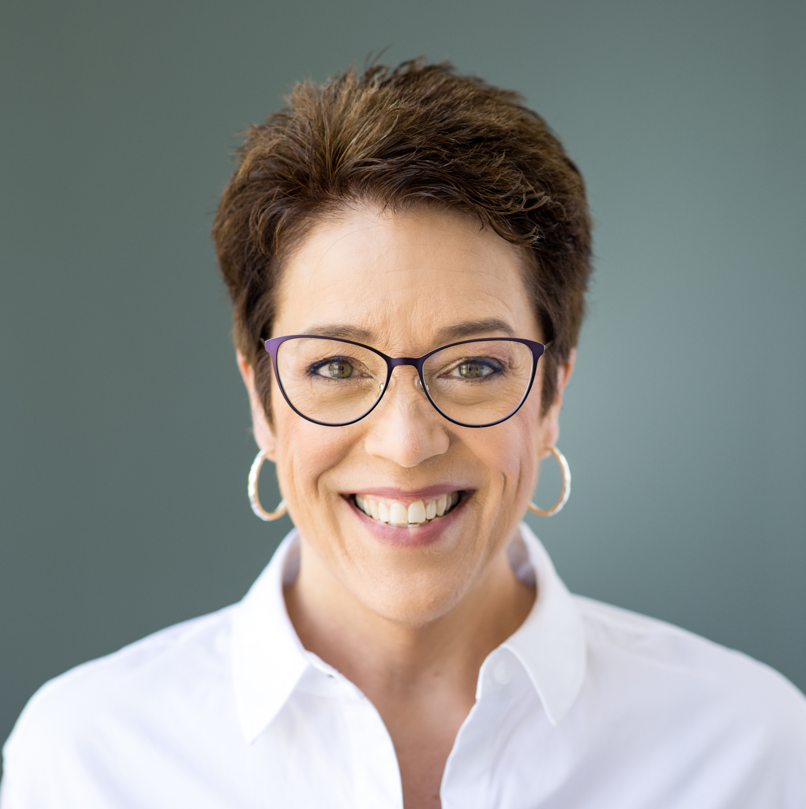
Ronda Nelson, PhD, MH, is the founder of Clinical Business Academy and Clinical Academy, and host of The Clinical Entrepreneur Show. Drawing from more than 20 years of experience as a practitioner, educator, and business owner, and having trained more than 4,000 wellness practitioners, she helps them identify the operational, financial, and leadership problems that keep their practices from growing. Her work focuses on patient retention, follow-up, communication, systems, profitability, and the business structure required to build a practice that supports both excellent patient care and long-term sustainability.
Related Content
- Clinical Academy – my membership for turning what you know into what you do with the patient in front of you, for when the problem is clinical.
- Clinical Business Academy – my paid business coaching program for growing your practice, increasing revenue, and getting your time back.
- The Clinical Entrepreneur Show – my YouTube channel, with business and clinical episodes for wellness practitioners.
Frequently Asked Questions About Whether a Functional Medicine Certification Is Worth It
How do I know if I need more clinical training?
You need more clinical training when you can identify a specific clinical problem you don’t know enough about to solve. This might be like not knowing what to do with a Hashimoto’s patient or someone with POTS. If the problem is a calendar that’s only half full or patients who drop off after a few months, that points toward issues on the business side of your practice.
Will another certification help me get more patients?
Usually not, on its own. A clinical certification will improve your knowledge about helping patients but it doesn’t change how patients find you, how to price your services, or whether they come back. If those are the problems – marketing, pricing, and a follow-up system – then a clinical certification won’t solve it.
How do I calculate the ROI of a training?
Start by estimating how many new patients the training will bring in and what each patient is worth to your practice. If the cost of the training is $5,000 and it will bring in another 15 to 20 patients, multiply that by your average patient value and compare it to the cost. If you can’t quantify the benefit to the business, that’s a good time to pause before you enroll.
Why do patients stop coming back after two or three months?
Patients often stop coming back because there’s no follow-up system that keeps them connected to the process between visits. It’s common for practitioners to lose half or more of their patients in the first 3-6 months, even when the clinical care is excellent. A consistent follow-up plan can do more for retention than another training.
Call to Action
If the problem is on the business side, even excellent clinical training probably won’t solve it. Once you know which kind of problem you’re dealing with, you can decide where your next investment belongs.
Take the free Practice Vitals Checkup before you enroll in anything else.
Disclaimer/Disclosure
This content is for educational purposes only and is intended for wellness practitioners working within the functional medicine and integrative health space. This episode reflects Ronda Nelson’s personal experience and professional perspective as a practitioner, business owner, and mentor. It is not medical, mental health, legal, or financial advice. Practitioners are responsible for applying this information within their legal and professional scope. Ronda Nelson is the founder and owner of Clinical Business Academy and Clinical Academy, both of which are mentioned in this episode. No sponsorship or outside compensation was received for these mentions.
Connect with Ronda