Wellness Practitioner Burnout and Professional Isolation
July 28, 2026
Wellness practitioner burnout does not always begin with too many patients, a packed calendar, or an overflowing task list. Sometimes it begins much more quietly – with the realization that you are carrying every clinical question, staffing problem, financial concern, and business decision by yourself.
A few weeks ago, I hit a wall. On paper, nothing catastrophic had happened. My businesses were still operating. I still loved working with practitioners. I still knew I was good at what I do.
And yet, for one very uncomfortable evening, I found myself seriously asking whether I wanted to do any of it anymore.
What followed was a six-hour stare-at-the-ceiling business reckoning. And the conclusion surprised me. I was not simply overworked. I was lonely.
This episode is about what can happen when capable practitioners spend too long trying to be the clinician, business owner, leader, decision-maker, troubleshooter, and fearless expert—all without a trusted person standing beside them.
Watch the Episode
When Business Overwhelm Is Not Really About the Workload
When running a practice starts to feel unbearable, the obvious explanation is usually that there is too much to do.
The schedule is full. A staff member calls out. Cash flow temporarily dips. A patient does not follow through. Something does not get ordered. A protocol that looked perfect does not produce the response you expected. Your brain begins compiling a middle-of-the-night list of every task, decision, and loose end you have not resolved.
That accumulation matters. But workload was not the whole explanation for what I experienced.
I am accustomed to being responsible. Like many of you, I know how to pony up, get out of bed, handle what needs to be handled, and keep moving. The more important question was why those normal responsibilities had suddenly started to feel like evidence that I should shut everything down.
Wellness practitioner burnout can feel especially intense when ordinary business pressure becomes fused with loneliness, self-blame, and the belief that every difficult outcome reflects a personal failure.
That is a very different problem from simply having too many items on a to-do list.
A task can be completed. A schedule can be rearranged. A process can be documented.
But when the internal story becomes, “I should already know how to handle all of this,” even small problems begin to feel much heavier than they are.
Why Competent Practitioners Still Struggle With Blind Spots
I know business. I understand marketing, operations, patient communication, practice growth, and many of the decisions wellness practitioners face every day.
That did not make me objective about my own business.
It is often much easier to look at someone else’s practice and see the issue immediately. You can identify the missing follow-up process, the unclear offer, the staff problem, the patient communication gap, or the system that was never fully built.
Then you turn toward your own business and somehow cannot see what is sitting directly in front of you.
That is not proof that you are incompetent.
That is why they are called blind spots.
The same thing happens clinically. A practitioner can be knowledgeable, experienced, and thoughtful – and still question why a patient didn’t respond as expected. Were the supplements wrong? Was another system more important to address first? Did they add too much too quickly, which caused a reaction? Was the patient able to follow the plan? Was there more information that hadn’t yet been discussed?
Clinical and business blind spots are not eliminated by expertise – having expertise does not automatically create objectivity.
When the patient, employee, or financial consequence belongs to you, you are no longer looking at it from the outside. You are carrying the history, responsibility, expectations, and emotional weight along with the facts.
That is exactly when another experienced set of eyes becomes valuable.
The Pressure to Be the Fearless Leader
Part of my hesitation in sharing this episode was the belief that I was supposed to have it all together.
I mentor practitioners. I lead communities. I teach business. People trust me to help them identify what is not working and determine what to do next.
So what happens when the person who is supposed to be the leader feels uncertain?
That question can create an enormous amount of isolation.
Practitioners experience a similar pressure with patients. You may present a clear recommendation while privately thinking, “I believe this is the right direction, but I cannot know with absolute certainty how this person will respond.”
That uncertainty is not a character flaw. It is part of responsible clinical work.
The problem begins when we believe credibility requires pretending uncertainty does not exist.
Leadership does not mean you have to know everything; it simply means you need enough honesty, judgment, and integrity to recognize when another perspective is needed.
Pretending you are certain about something can protect the image of the fearless leader for a while. But having this stance also makes it harder to ask for help before the walls start to close in.
Admitting vulnerability does not mean every struggle needs to be public knowledge. It simply you can be honest enough with the right people and say:
- I am not sure if this is the right decision.
- It feels like I’m missing something.
- I really need another perspective.
- Can I talk this through with you?
- Does this look different from your perspective?
Those conversations do not make us less credible. They help us make better decisions.
Why Practice Ownership Can Feel So Lonely
A practitioner can have a supportive spouse, loving family, wonderful patients, competent staff, and a full life – and still feel professionally lonely.
Professional loneliness does not necessarily mean the absence of people. This feeling of loneliness comes from not having people in your world who understand the weight of the decisions you are carrying.
Your spouse may love you deeply and still have no desire to discuss your CRM, employee bonus structure, patient-retention problem, supplement protocols, hiring concerns, or cash-flow problems.
Your employees may care about the practice, but its not advisable to process leadership decisions with the people who will be affected by them.
Your patients are certainly not the appropriate place to work through your uncertainty.
And your friends may not understand why a missed follow-up, an unsuccessful protocol, or a difficult hiring decision can keep you up and night with a brain that won’t stop ruminating about it.
This scenario leaves many practice owners surrounded by people they care about – yet they have no one to talk to.
Professional isolation develops when a practitioner has significant responsibility but is missing a psychologically safe place to examine the decisions related to that responsibility.
That is the distinction I finally saw.
I did not need someone to rescue me from my business. I needed to find people who had enough context to understand the questions I was asking.
I needed someone who could say, “You are blaming yourself for something that is not entirely yours,” or, “Yes, there is a gap here, and this is what you should consider next.”
Sometimes we need encouragement.
Sometimes we need to be corrected.
Sometimes we need another person to help interview a prospective employee because we are too close to the situation.
Sometimes we need to talk through a clinical approach with another practitioner who understands the complexity.
And sometimes we simply need to hear, “No, you are not the only one who has no idea what to do with this.”
Community Is Not a Substitute for Competence
Community is not valuable because it allows practitioners to outsource every difficult decision.
It is valuable because it helps us think more clearly.
The goal is not dependency. The goal is perspective.
A strong professional community should not tell every practitioner what to do or create one universal answer for every practice. It should help members:
- Identify assumptions they may not realize they are making
- See business or clinical blind spots
- Evaluate options more objectively
- Learn from someone else’s experience
- Ask better questions
- Make decisions with greater clarity
- Recover more quickly when something does not go as planned
You are still responsible for the final decision. You are still responsible for practicing within your legal and professional scope. You are still responsible for knowing your patients, your team, your values, and your business.
But you do not have to come up with every insight alone.
None of us know everything. None of us can see ourselves perfectly. And none of us become better clinicians or business owners by pretending otherwise.
A Business Reset Does Not Always Require Burning It Down
My six hours on the couch did not end with a resignation letter, a retirement plan, or the decision to close my online programs.
It ended with a clear realization of where I was at – and what I needed as the next step.
I still love this work. I still want to help practitioners. I still want to be the best clinician, teacher, and leader I can be.
What had to change was not necessarily the mission. What had to change was the way I was trying to carry the mission – alone.
Having a business reset can mean:
- Reconnecting with why the work matters to you
- Separating a difficult season from a permanent conclusion
- Admitting where you need support
- Finding people who understand the decisions you face
- Releasing the expectation that you should never drop a ball
- Recognizing that one imperfect outcome does not erase your competence
- Building relationships before the next crisis forces the issue
There may still be systems to improve, responsibilities to delegate, boundaries to establish, or business decisions to make. Community does not eliminate the need for those changes.
It makes it easier to see which changes actually matter.
Find the People Who Understand This Work
You do not have to build your practice in isolation. Clinical Business Academy gives established wellness practitioners a place to work through business decisions, uncover blind spots, strengthen their systems, and grow alongside people who understand what practice ownership actually requires.
I own and lead Clinical Business Academy, so yes, I am biased – but I also built it because trying to do this work alone is unnecessarily hard.
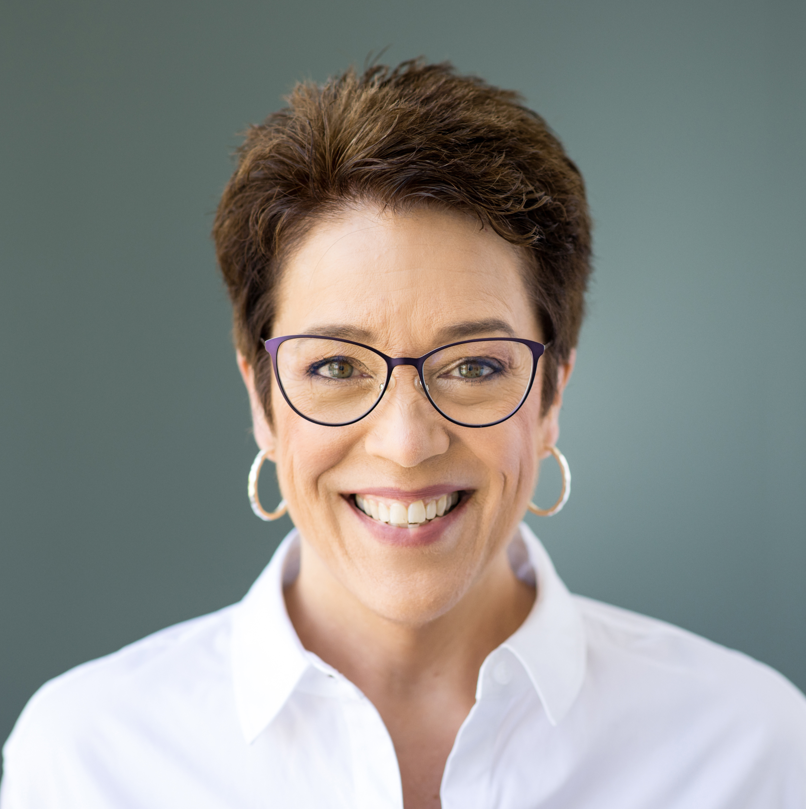
About Ronda Nelson
Ronda Nelson is the founder of Clinical Business Academy and host of The Clinical Entrepreneur. Drawing from more than 20 years of experience as a practitioner, educator, and business owner. Having trained more than 4,000 wellness practitioners, she helps them identify the operational, financial, and leadership problems that keep their practices from growing.
Her work focuses on patient retention, follow-up, communication, systems, profitability, and the business structure required to build a practice that supports both excellent patient care and long-term sustainability.
Related Content
- Clinical Business Academy — Learn about Ronda’s strategic practice-growth community.
- The Practice Vitals Checkup – Identify the business leak costing your practice patients, revenue, or momentum.
- What I’ve Learned About Leadership (After 8 Employees in 11 Months!)
Frequently Asked Questions About Wellness Practitioner Burnout
Why can owning a wellness practice feel so lonely?
Practice owners often carry clinical, financial, staffing, marketing, and operational decisions that friends or family members may not fully understand. A practitioner can have strong personal relationships and still feel professionally isolated. The loneliness may come less from a lack of people and more from not having an informed person with whom to examine difficult decisions.
How do I know whether I’m burned out or simply overwhelmed?
Overwhelm can arise from workload, insufficient support, unclear priorities, poor systems, emotional strain, or several factors at once. This episode does not diagnose burnout. Start by identifying what feels heaviest and whether the problem improves with rest, clearer priorities, operational support, or informed outside perspective. Persistent symptoms warrant support from an appropriately qualified professional.
Why is it easier to see problems in someone else’s practice?
You have emotional history, expectations, fears, and assumptions attached to your own practice. That makes complete objectivity difficult, even when you are highly experienced. An informed outsider can sometimes notice patterns, gaps, or options that are difficult to see from inside the business.
Does asking for help mean I’m not a capable practitioner or business owner?
No. Responsible practice ownership includes recognizing the limits of your own perspective. Asking for input does not transfer responsibility for the decision; it gives you more information and another angle from which to evaluate it. The goal is not dependency. It is better-supported judgment.
What should I look for in a practitioner community?
Look for relevance, honesty, psychological safety, and useful accountability. Members should understand the realities of wellness-practice ownership and be willing to question ideas thoughtfully—not simply approve everything. The right community should help you think more clearly and take appropriate action rather than make you feel more inadequate or overwhelmed.
Find the Business Gap You Should Address First
Feeling overwhelmed does not always mean you need to work harder or rebuild everything.
Sometimes one unresolved operational or strategic gap creates friction throughout the entire practice—and because you are living inside the business every day, it can be remarkably difficult to see which gap is doing the most damage.
The Practice Vitals Checkup is a practical 10-question audit designed to help you evaluate the health of your practice and identify the business issue that may be costing you the most patients, revenue, and momentum.
Instead of trying to fix everything at once, you will have a clearer place to begin.
Take the Practice Vitals Checkup
Disclaimer/disclosure
This content is for educational purposes only and is intended for wellness practitioners working within the functional medicine and integrative health space. This episode reflects Ronda Nelson’s personal experience and professional perspective as a practitioner, business owner, and mentor. It is not medical, mental health, legal, or financial advice. Practitioners are responsible for applying this information within their legal and professional scope.
Ronda Nelson is the founder and owner of Clinical Business Academy and Clinical Academy, both of which are mentioned in this episode. No sponsorship or outside compensation was received for these mentions.
Connect with Ronda