Using AI Safely in Your Functional Medicine Practice
September 8, 2026
You’ve likely used AI in your functional medicine practice to ask a specific patient question, and part of you is wondering if you did it the right way. Here’s the honest answer: probably not, and neither did I the first dozen times. The most dangerous AI answer in a clinical practice is never the obviously wrong one. It’s the answer that uses the right language, makes you feel good, cites a study, and turns out to be completely fabricated.
I test AI constantly, more than most practitioners realize, and more often than not what comes back is maybe sixty five, seventy percent right. The answer sounds correct and it uses terminology that’s familiar.
And then, somewhere in the middle, it recommends a supplement that doesn’t exist or a research citation that isn’t even real. AI would rather sound confident in the output than admit it made an error. And that absolutely cannot be tolerated when it comes to clinical questions, treatment recommendations, or supplement recommendations. Watch the full episode below.
How Do I Know When AI Is Giving Me A Wrong Clinical Answer?
You mostly can’t tell by reading it once. The physiology will sound right and the overall structure sounds logical.
The only real defense is checking every citation it gives you against the actual research, without exception. Because AI loves to make things up just to provide you with an answer. And it does so very convincingly.
If your patient case is complex, with multiple systems breaking down at once, that’s exactly when AI’s confidence outpaces its accuracy. It will bridge a gap in the logic without telling you it bridged anything, and it will quietly lean toward conventional, Western-model thinking unless you tell it otherwise. You have to give it your clinical perspective, from a functional medicine standpoint, every time, or it will default to someone else’s.
What Should I Never Ask AI To Do In My Practice?
AI can expand your thinking, but it can never generate a diagnosis, build your protocol, or decide what type of care your patient needs – that decision belongs to you. I will never, ever ask it for a diagnosis or a protocol. AI will almost always give you too many supplements, too many lifestyle changes, and theoretical add-ons your patient will never actually do.
It doesn’t know your patient’s budget, or that you’d rather use Gaia or CellCore over a synthetic option. Those are the details that you are responsible for so don’t delegate that to AI or to anyone else.
How Can I Use AI With A Complicated Patient?
I start by narrating the entire patient timeline out loud into AI including birth history, antibiotics, illnesses, diet, prior providers, everything. Uploading tests comes next and context is important. Without it, AI is likely to provide a wrong answer with a high level of confidence.
Once the foundation is established, I never ask for a diagnosis. Instead, I ask AI to broaden my thinking instead of narrowing it. What’s the mechanism connecting these symptoms? What am I not considering?
I tell it directly not to placate me, not to tell me I’m smart, and to challenge everything I say, because a tool that only agrees with you is worse than useless in a clinical decision. I actually ask for a confidence score on the information it provides. Anything less than a ten out of ten, I keep asking more questions.
How Do I Protect Patient Privacy When Using AI?
Before uploading any lab results, all identifying information about the patient must be removed. This includes name, address, phone, accession number, anything that could be tracked back to a real person.
Avoid saving the file with the patient’s name. Use initials only, followed by a date.
It sounds tedious – and it can be the first few times. With a little practice, it gets easier and is honestly the difference between spending hours trying to connect the dots in a complex case and having another set of eyes that might spot the things you would otherwise miss.
Can AI Help Me Explain the Diagnosis To My Patient?
Yes, and this is one of the genuinely useful ways to use it. You can ask AI for a word picture or a short story that illustrates what’s going on and then relay it to the patient. This helps it stick better for the patient and can allay their fears that something very wrong might be going on.
How Do I Use AI Safely In My Functional Medicine Practice?
The rule that protects you is simple: use AI to help you connect the dots, not automatically give you the answers. Keep asking AI questions about physiology, why a marker is high, what could be the underlying cause, or how the markers could possibly connect together.
Never ask it to make the decision or generate the answer that only you can do. AI can broaden your thinking, catch a blind spot, and save you real research time but it is not a suitable substitute for what you see with your own eyes.
CTA
Watch the full episode: if you’ve been quietly wondering whether you’re using AI the right way when it comes to patient details, this episode explains it all.
Are you ready to bring this same kind of clarity to the business side of your practice? Schedule a Practice Strategy Call with Ronda.
Author Bio
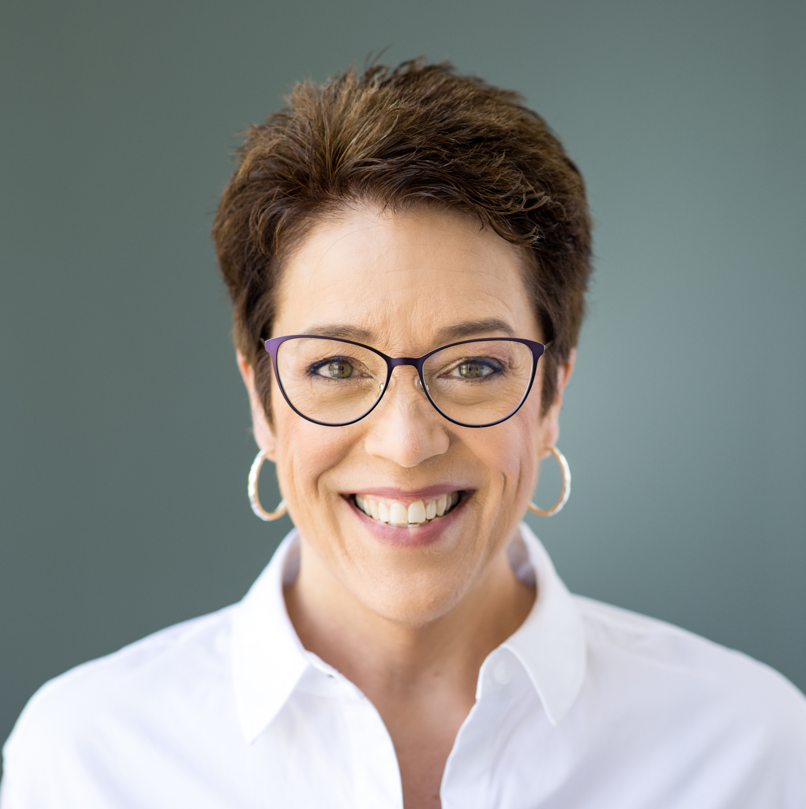
Ronda Nelson, PhD, MH, is the founder of Clinical Business Academy and Clinical Academy, and host of The Clinical Entrepreneur Show. Drawing from more than 20 years of experience as a practitioner, educator, and business owner, and having trained more than 4,000 wellness practitioners, she helps them identify the operational, financial, and leadership problems that keep their practices from growing. Her work focuses on patient retention, follow-up, communication, systems, profitability, and the business structure required to build a practice that supports both excellent patient care and long-term sustainability.
Related Content
Clinical Business Academy, learn about Ronda’s strategic practice-growth community for practitioners ready to build real business systems.
The Practice Vitals Checkup, identify the business leak costing your practice patients, revenue, or momentum.
The 5 Clinical Non-Negotiables, the foundational clinical areas Ronda returns to before reaching for complicated protocols or AI shortcuts.
Frequently Asked Questions About Using AI in a Functional Medicine Practice
Is it safe to use AI for clinical decision making in a functional medicine practice?
It’s safe for generating questions, catching blind spots, and broadening your differential thinking about a case. It’s never safe for making a diagnosis, creating a protocol, or establishing clinical priorities, since AI can fabricate citations and supplement names that sound completely legitimate and real.
Can AI diagnose a patient accurately?
No. AI cannot reliably diagnose a patient and should never be asked to try. It doesn’t have access to what you actually observe with your eyes, hear in their tone or emotion. Without context, it can easily fabricate confidence it hasn’t actually earned.
How do I keep patient information private when using AI?
Redact all identifying information from a lab test or other document before uploading it – the patient’s name, address, phone, accession number, and anything else that traces back to a real person. Never save the file under the patient’s actual name; use initials only with no dates attached.
Which AI tool is best for functional medicine practitioners?
There’s no single best tool for this. What matters more than the platform is how you use it. Start by providing full patient context, asking for mechanisms and alternatives instead of a diagnosis, and checking every citation before you quote it.
CTA
AI can make your clinical thinking faster, but one unchecked gap in the wrong place can cost more than the time it saved. If you’re not sure where your practice’s biggest gap actually is, take the Practice Vitals Checkup.
Disclaimer/Disclosure
This content is for educational purposes only and is intended for wellness practitioners working within the functional medicine and integrative health space. This episode reflects Ronda Nelson’s personal experience and professional perspective as a practitioner, business owner, and mentor. It is not medical, mental health, legal, or financial advice. Practitioners are responsible for applying this information within their legal and professional scope.
Ronda Nelson is the founder and owner of Clinical Business Academy and Clinical Academy, both of which are mentioned in this episode. No sponsorship or outside compensation was received for these mentions.
Connect with Ronda